
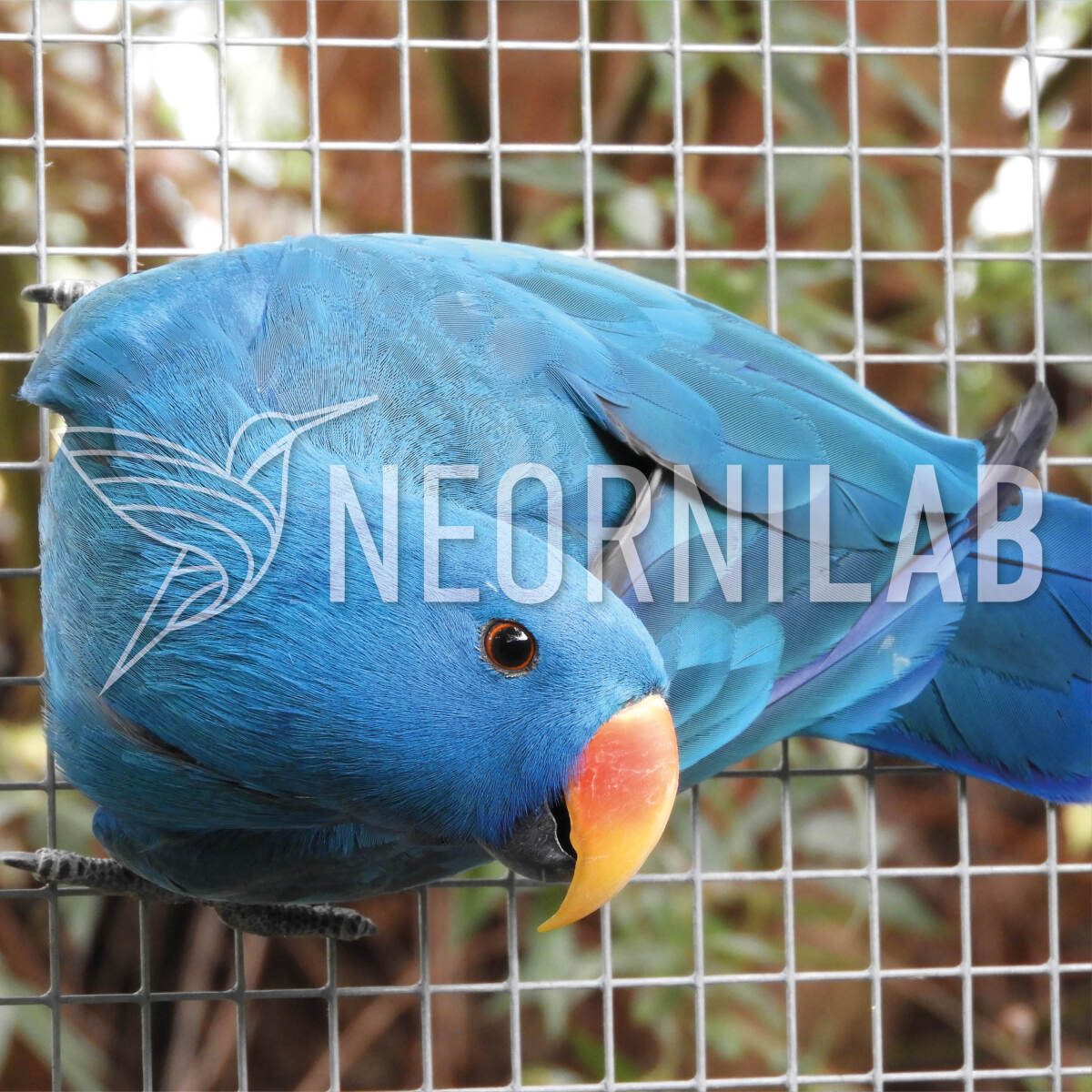
Blue mutation in the Eclectus parrot
15/12/2023
The blue mutation in the Eclectus parrot (Eclectus roratus): how it arises and is inherited, and the DNA test that confirms split carriers.
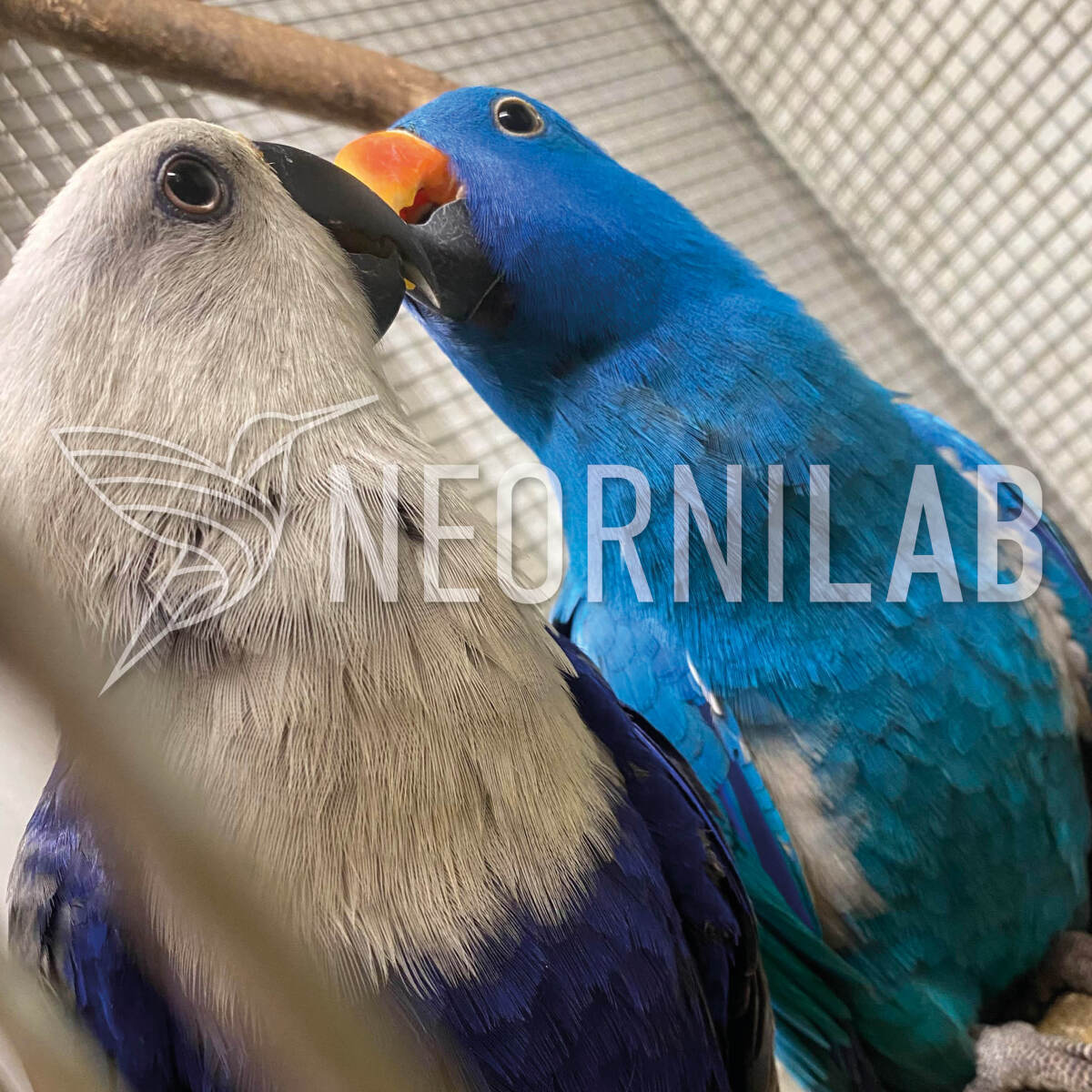
In the Eclectus parrot (Eclectus roratus), a rare mutation occurs in aviculture within some populations that produces a beautiful blue colour of the plumage. The male is light blue, while the female shows a combination of dark blue, white and grey. These birds are highly sought after among enthusiasts, and large sums are often paid for blue birds and (possibly) split birds.
At NeorniLab we have succeeded, as the first European laboratory, in developing a genetic test that can detect the genetic variation responsible for the blue mutation in the Eclectus parrot (Eclectus roratus).
But how exactly does that work? In this article we give some more information about this unique genetic test in the Eclectus parrot.

Origin
According to some sources, the first blue Eclectus parrots are said to have appeared in the early 1990s.
Colour mutations often arise spontaneously in a population with a certain degree of inbreeding. That is because recessive traits then have a greater chance of appearing. The blue phenotype (the outward expression of a genetic background) in Eclectus parrots is also a recessive mutation. That means birds only show a blue plumage when the allele is present in double (once from the father, once from the mother). Birds that do not carry the mutation (called wild type) or birds that have the allele only once (called carriers or split birds) will therefore show the normal wild colour.
Cause
Blue and red make green
In a number of parrots (order Psittaciformes), psittacofulvin is produced. Psittacofulvin is a yellow-red pigment in the plumage. Together with the blue structural colour of the feathers, this makes the male largely green. In the female, which is largely blue-red, the disappearance of the red pigment brings out a different structural colour in the areas that are normally red and therefore have no blue structural colour.
The genetic variation that we at NeorniLab discovered in Eclectus parrots causes a disruption in the production of this red pigment. As a result, the pigment is no longer produced as it should be, and in certain feather areas the blue or grey-white structural colour of the feathers comes to the fore.